
Test the idea before making it a decision
Run two or more variants, define the success goal, and read the result with confidence instead of choosing by taste or impression.
From a raw signal to insight you can use.
Every component is designed to turn data or daily activity into a clearer decision your team can act on and review.
A clear goal
Connect the experiment to a measurable business or behavioral action.
Controlled allocation
Define the audience, allocation, and duration without changing the site's architecture.
An actionable result
Compare performance, declare a winner, and scale the change with confidence.
A few steps, with context that stays connected.
- 01
Create
Define the page, variants, goal, and audience.
- 02
Analyze
Monitor performance until the result reaches a reliable level.
- 03
Apply
Publish the winning variant and continue the optimization cycle.
What is A/B testing in Qube Analytics?
Compare two versions of a page or interface element by showing them to separate visitor groups and measuring each against a defined goal.
Improve your site with data, not guesswork
Test ideas and designs under controlled conditions, then compare their performance against the metric you selected.
Measurable impact
A/B testing gives teams a controlled way to measure whether a change improves the chosen outcome.
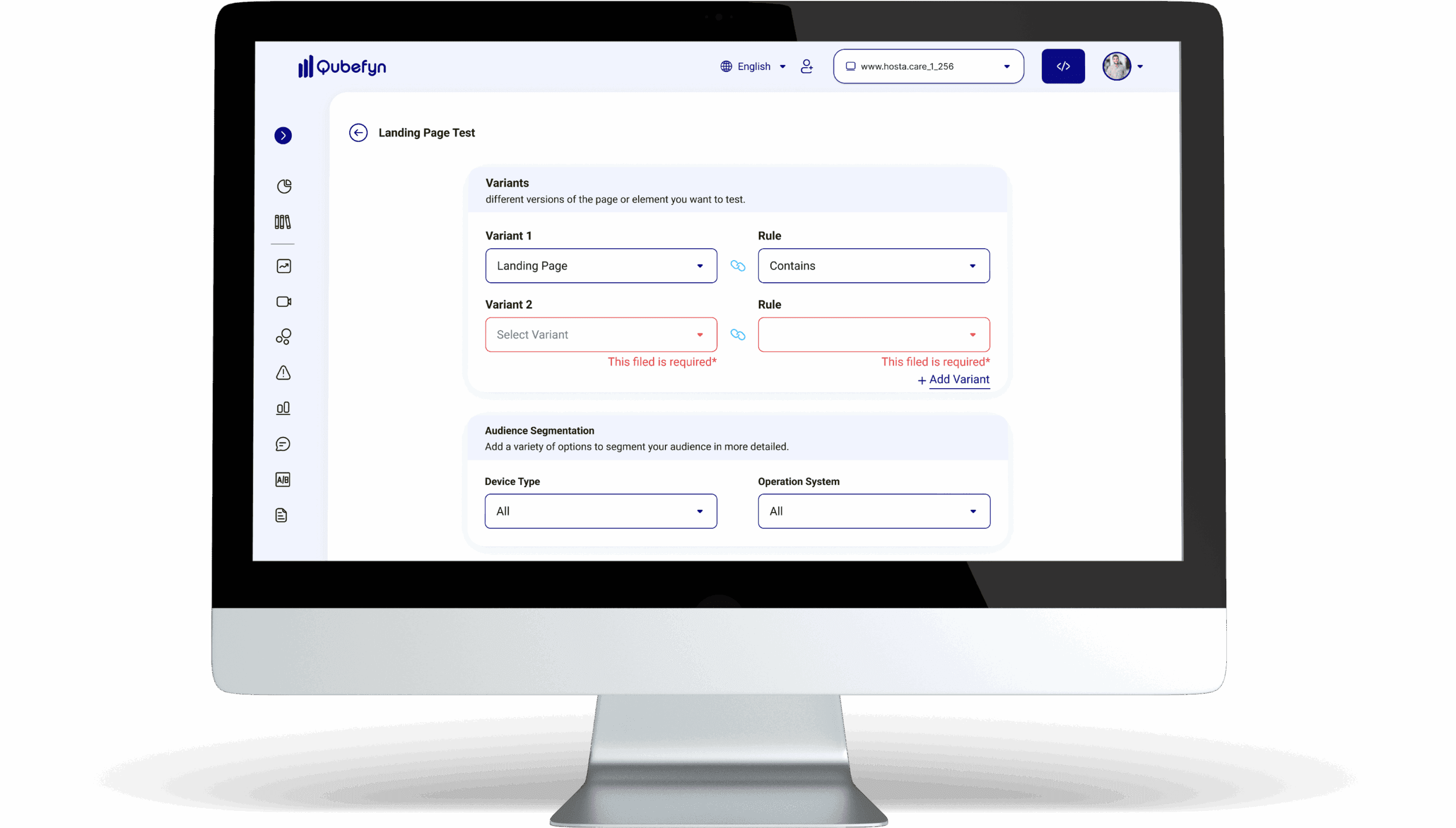
Capabilities for setting up an A/B test
Define test pages
Determine exactly which pages you want to include in the experiment.
Choose test objectives
Link the experiment to a clear goal that can be measured and results compared.
Customize the percentage of visitors
Define how traffic is distributed between variants according to the experiment design.
Start and stop conditions
Adjust the test start and stop conditions to suit the sample size and duration.
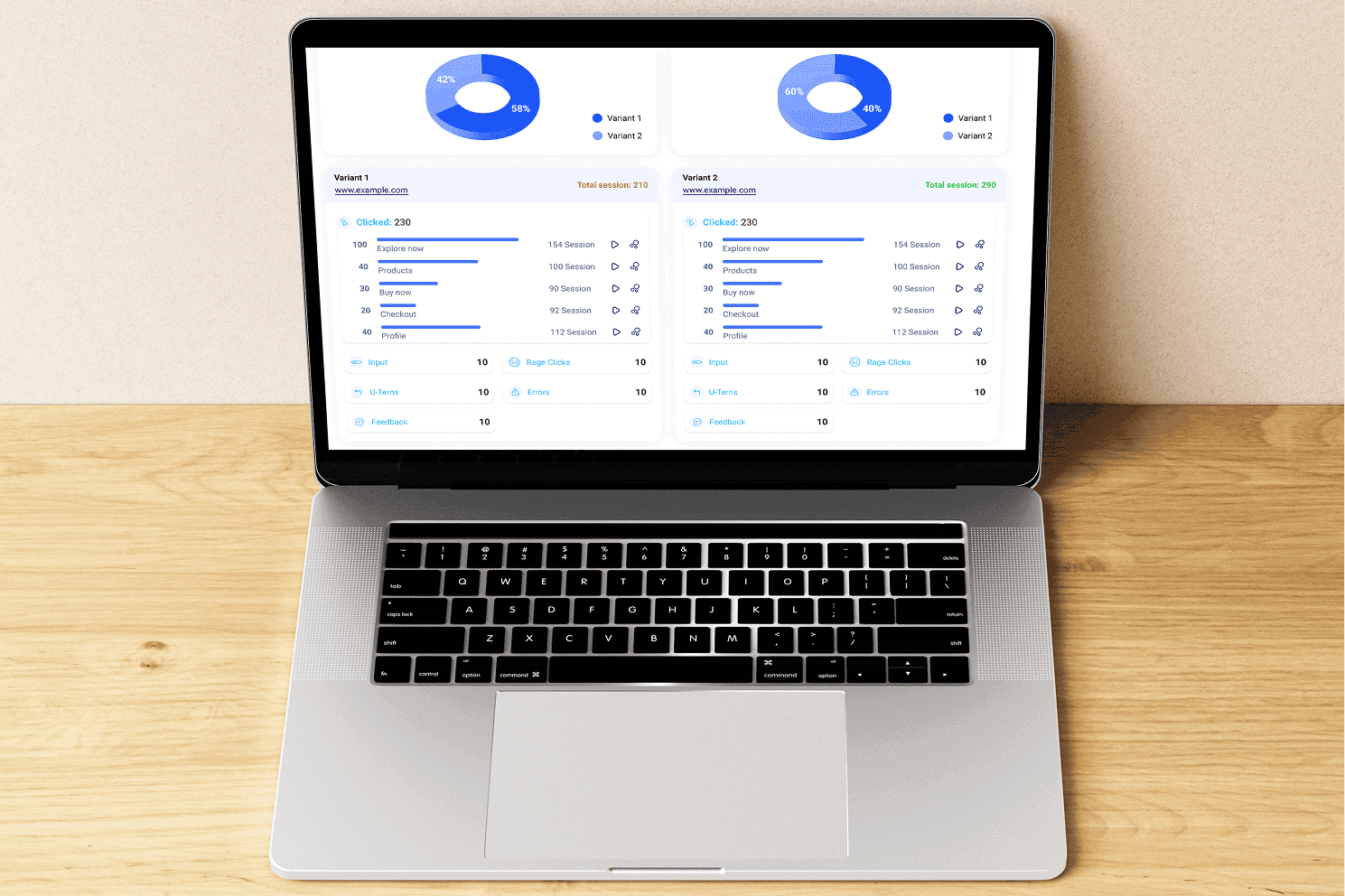
A/B test configuration and result analysis — original product view 1
Clear evidence for identifying the stronger design
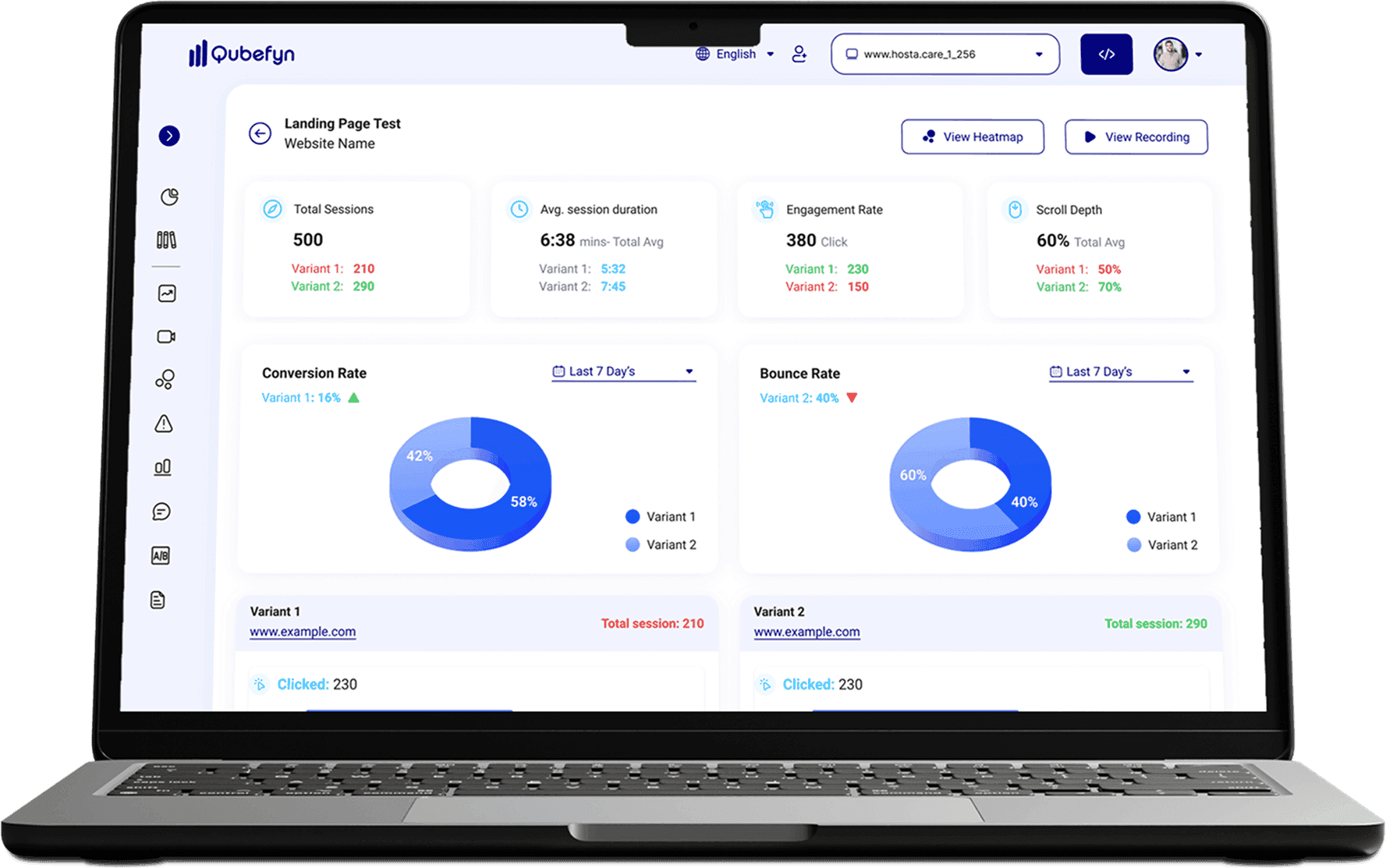
Compare variant performance
Directly compare the performance of version A with that of version B.
View key metrics
See the number of visitors, conversion rate, and metrics you chose to test.
Identify the leading variant
Identify the variant currently leading against the selected goal.
Statistical context
Use sample size, uncertainty, and statistical analysis to distinguish a useful signal from random variation.
Track progress over time
Monitor how each variant performs throughout the test.
Manage tests from one place
A unified experiment view
Create tests, follow their status, and review available results from one management view.
A/B test configuration and result analysis — original product view 2
Who can benefit from A/B testing?
A/B testing enables you to make data-driven decisions and improve your site's performance.
Senior management and decision makers
Make strategic decisions backed by direct insights and real data.
Product managers
Develop your products based on customer needs and wants.
User experience designers
Improve the user interface and user experience based on test results.
Product development teams
Develop products based on actual customer needs and wants.
Website developers
Test software and design changes directly, and measure their actual impact on the user experience.
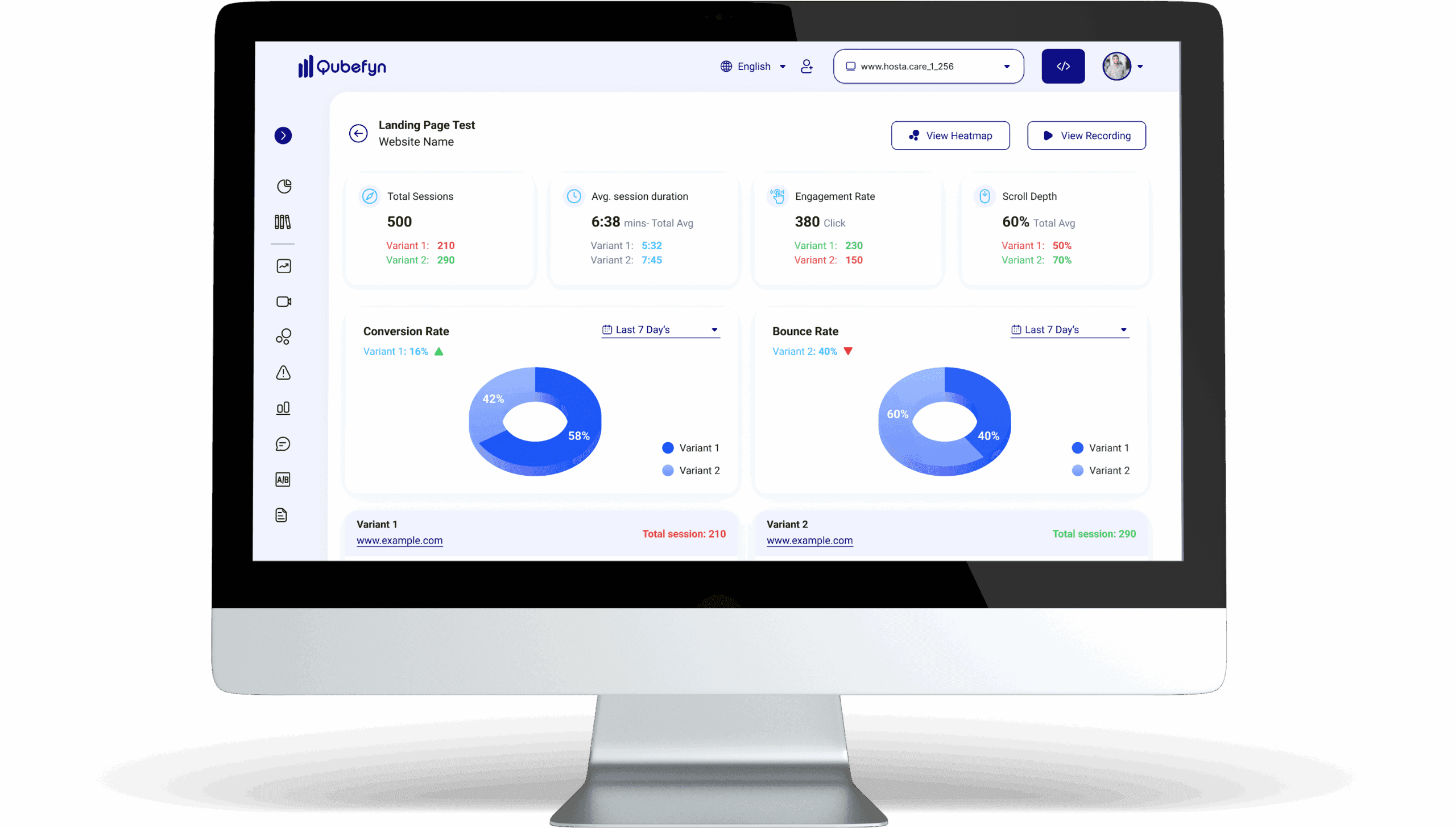
A/B test configuration and result analysis — original product view 3
Create the test, analyze performance, and implement what works
Create A/B tests, monitor their performance, and use the resulting evidence to improve the user experience and conversion journey.
Step 1: Create the test
Define the goal, design the page variants, and set the traffic allocation for a controlled comparison.
Step 2: Analyze performance and compare variants
Monitor results as the test runs and compare variants against the chosen goal, sample size, and available statistical evidence.
Step 3: Implement improvements and expand
When the evidence supports a change, plan an appropriate rollout and continue learning through follow-up tests.
Frequently asked questions about A/B testing
Answers about test elements, duration, metrics, and what to do after an experiment ends.
01Why should I use A/B testing for my website?+
To evaluate changes against conversion or experience goals and make design and development decisions using observed evidence rather than guesswork.
02What can I test with A/B Testing?+
You can test supported elements such as page titles, calls to action, images, layouts, and colors, provided the experiment has a clear hypothesis and measurable goal.
03How long should A/B testing last?+
Set the duration and stopping rule before launch. The appropriate window depends on traffic, conversion volume, expected effect size, and the statistical method you use.
04How do I know which design is best?+
The results dashboard compares variants A and B against your chosen metrics and highlights the leading variant once there is enough evidence.
05What key metrics can I track in A/B testing?+
You can track metrics like conversion rate, traffic, average session time, bounce rate, and other goals you set.
06What do I do after the test ends?+
Analyze the results, apply the stronger version when the evidence supports it, and continue the improvement cycle with new tests.
Let us connect the challenge to the right solution.
A short session to understand the context and identify the first experiment that can demonstrate real value.